
Tinnitus
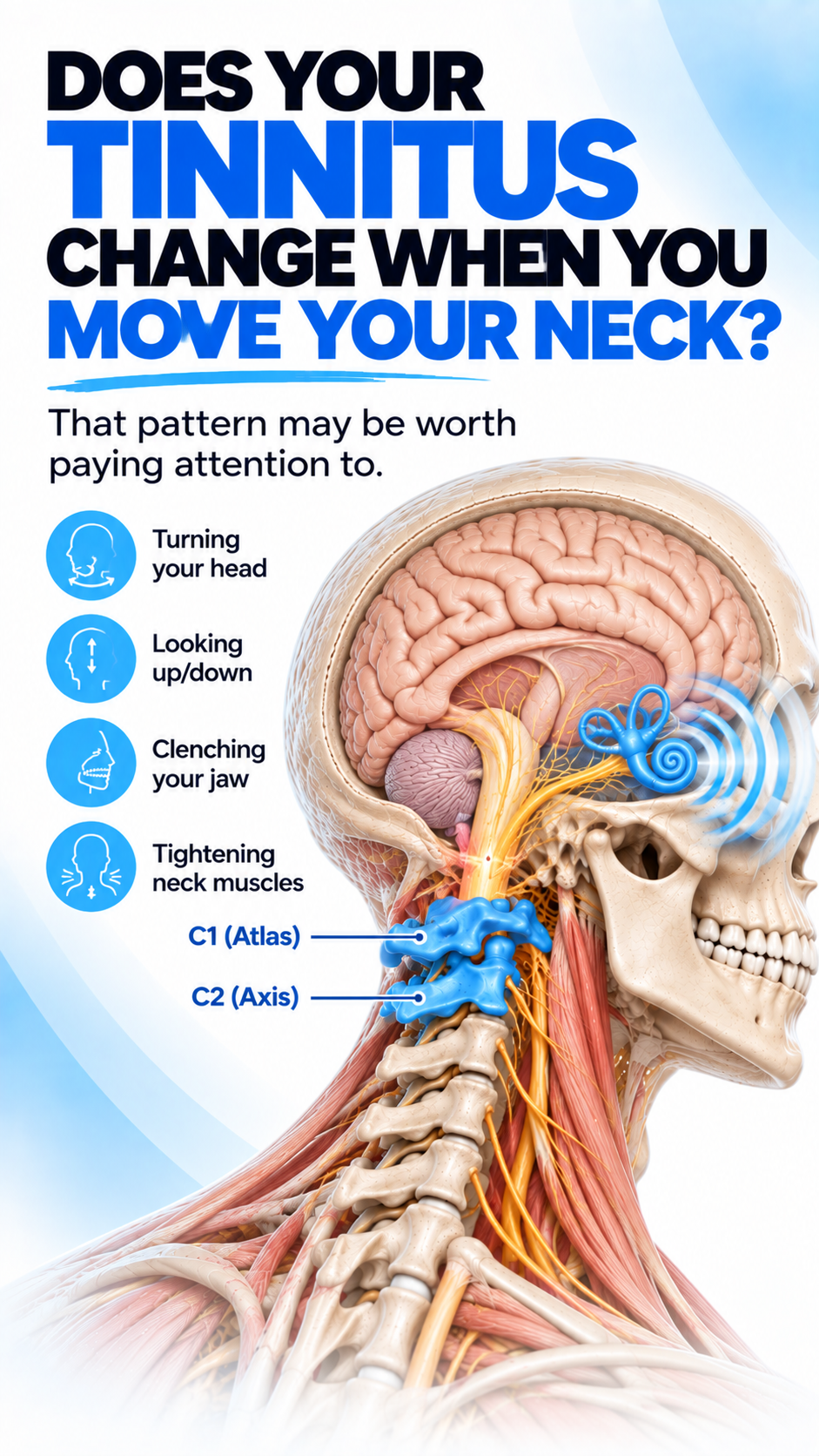
If you have ringing in your ears, try paying attention to this:
Does the sound change when you turn your head?
What about when you look up or down, clench your jaw or tighten your neck muscles?
For some people, the pitch or intensity of tinnitus can temporarily change with movements like these.
This is often discussed as somatic—or somatosensory—tinnitus.
It reflects the fact that sensory information from areas such as the neck and jaw can interact with pathways involved in hearing and tinnitus perception.
Now, tinnitus has many possible causes, so this doesn't mean ringing in your ears is automatically coming from your neck. New or persistent tinnitus should be appropriately evaluated.
But if your tinnitus consistently changes when you move your neck—especially if you also have a history of neck problems or injury—that pattern is worth mentioning to your healthcare provider.
An Upper Cervical Chiropractor can evaluate whether dysfunction in the upper cervical region may be another relevant piece of your overall picture.