
Conditions We Evaluate
When standard medical tests keep coming back "normal," the answers often lie right at the top of your spine.
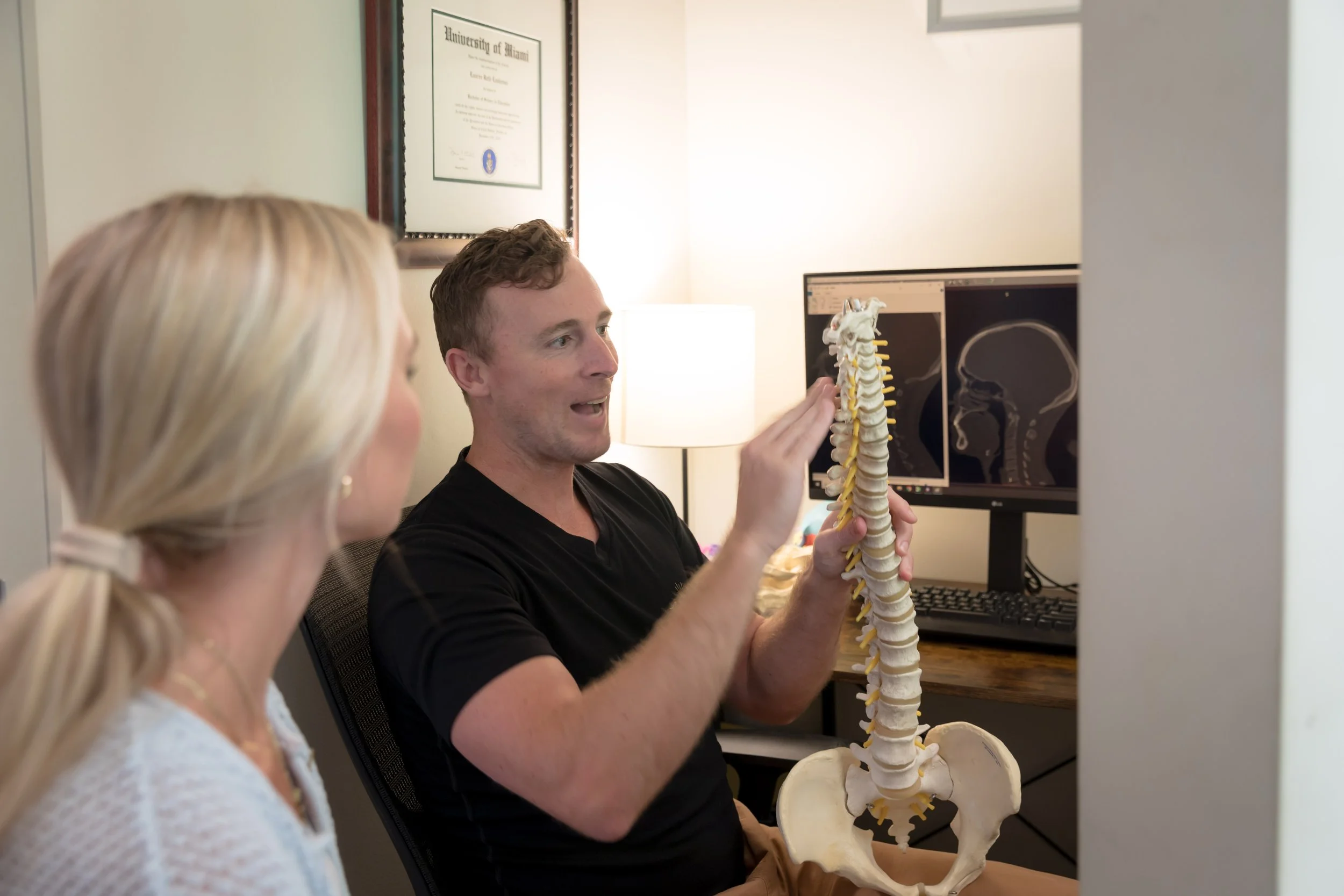
Why Your Upper Neck Controls How You Feel
Your craniocervical junction (the top two vertebrae right under your skull) is the most critical structural intersection in your body. It protects your brainstem, guides crucial blood flow to your brain, and dictates your autonomic nerve function. When accidents, whiplash, or postural stress cause this area to subtly twist or compress, it triggers widespread neurological symptoms.
We focus on restoring space and balance here to allow your body to heal naturally. Here are the primary conditions we evaluate in our Fairhope office:
🧠 Migraines & Chronic Headaches

Most headache patients are told their brain scans are perfectly normal, leaving them without an answer as to why the pain keeps happening.
The Upper Cervical Link: A misalignment at the top of the neck can physically restrict blood flow traveling to and from the brain and create mechanical tension on the brainstem. This irritation triggers the severe, throbbing vascular changes known as migraines.
Common Symptoms We See: Throbbing head pain, extreme light and sound sensitivity, nausea, visual auras, and losing days at a time to a dark room.

🌀 Vertigo, Dizziness, & Meniere’s Disease
When you experience chronic dizziness or spinning, your brain is receiving conflicting signals about where your body is in space.
The Upper Cervical Link: Your top neck vertebrae are packed with dense nerve receptors (proprioceptors) that talk directly to your inner ear and balance centers. If these vertebrae are twisted out of alignment, they send "glitched" data to your brain, causing the illusion of spinning or unsteadiness.
Common Symptoms We See: Room-spinning vertigo, chronic off-balance sensations, brain fog, ringing in the ears (tinnitus), and fullness in the ear.
🩸 Dysautonomia & Autonomic Imbalances

Your autonomic nervous system is your body's autopilot—it regulates your heart rate, blood pressure, digestion, and temperature without you thinking about it.
The Upper Cervical Link: The brainstem acts as the main control tower for your autopilot system. Structural compression at the top of the neck irritates these master nerves, causing your body to fluctuate unpredictably between "fight or flight" and "rest and digest" modes.
Common Symptoms We See: Sudden heart rate spikes (POTS-like symptoms), temperature regulation issues, chronic fatigue, and unexplainable anxiety.
💥 Chronic Neck, Shoulder, & Upper Back Pain

If you have been getting regular massages or physical therapy for your shoulders and upper back but the tension keeps returning, the true root cause hasn't been addressed.
The Upper Cervical Link: Your body will always prioritize keeping your eyes level with the horizon. If your top neck vertebrae are tilted, your entire spine will adaptively twist beneath it to compensate. This forces your shoulder and upper back muscles into permanent structural spasm to support your heavy head.
Common Symptoms We See: Deep knots between the shoulder blades, chronic neck stiffness, radiating shoulder tension, and a constant urge to "pop" your own neck.
⚡ Post-Concussion Syndrome & Brain Fog

Many people assume a concussion only injures the brain. However, it takes significant physical force to cause a concussion—force that always impacts the upper neck.
The Upper Cervical Link: "Lingering" concussion symptoms are frequently misdiagnosed neck injuries. Compression at the skull base impairs proper cerebrospinal fluid (CSF) flow and cerebral circulation, leaving patients trapped in perpetual brain fog long after the initial impact.
Common Symptoms We See: Inability to focus, memory issues, fatigue, persistent low-grade headaches, and emotional irritability.

Ready for Answers That Actually Make Sense?
Your scans might say you're "normal," but you deserve to feel good again. Let's start with a casual, zero-pressure conversation to see if your neck is the missing piece to your puzzle.
Specific Conditions
Click below to learn more:
Anxiety/Mental Health
Balance Issues
Carpal Tunnel
Dysautonomia
Ear Issues
Neck Pain
Occipital Neuralgia
Post Concussive Symptoms
Shoulder/Arm Pain
…And more